

Key Takeaways
- Do not enter a fire-damaged home until firefighters or local officials say it is safe.
- Put people, pets, medicine, and temporary shelter before property concerns.
- Start photos, videos, receipts, and notes before moving or discarding damaged items.
- Notify your insurer, landlord, if applicable, and utility providers as soon as possible.
- Smoke, soot, water, and weakened building materials can create risks long after flames are gone.
- Keep a simple written checklist to make the next steps easier to manage.
A house fire can disrupt daily life in a matter of minutes, leaving families to navigate urgent decisions about temporary housing, salvaging belongings, and beginning the recovery process. During the first 72 hours, the priority should always be ensuring everyone’s safety, securing a safe place to stay, and following guidance from local emergency officials. Once immediate needs have been addressed, homeowners can begin planning for repairs and coordinating fire damage restoration in North Shore Boston to assess the property, mitigate further damage, and support the transition toward recovery.
Many homeowners also need assistance with smoke, soot, water damage, and damaged belongings after the immediate emergency has passed. Understanding the steps to take after a fire and the fire damage restoration process can help families prepare for the cleanup and recovery work that may be required once authorities determine the property is safe to enter. For those seeking fire damage restoration in Newton, understanding what to expect at each stage of the process can help plan the recovery and restore the property as efficiently as possible.
Why the First 72 Hours Matter
The first few days after a fire can feel confusing and rushed. However, acting too fast may create new problems. Re-entering too soon can cause injury, while throwing away damaged belongings before documenting them can make an insurance claim harder. The U.S. Fire Administration’s after-fire guidance provides helpful information on early recovery, insurance concerns, property records, and document replacement.
Focus on small, clear decisions. Confirm that everyone is safe, find a place to stay, collect basic records, and ask questions before cleanup begins. It is okay if every detail is not handled on the first day.
Families in nearby communities may also seek information on fire damage restoration services and recovery guidance when smoke, water, or soot damage affects a home. Any cleanup plan should begin only after officials approve access to the property.
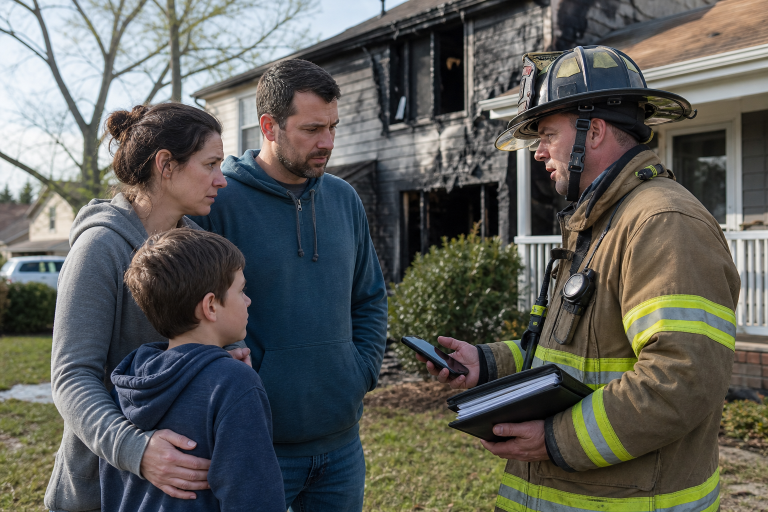
First: Confirm Everyone Is Safe
Begin with people and pets. Seek medical help for burns, trouble breathing, eye irritation, dizziness, or possible smoke exposure. Even when someone feels fine at first, symptoms can appear later. Keep children and pets away from the home, debris, firefighter-occupied vehicles, and standing water.
- Call 911 if anyone needs emergency care.
- Move to a safe location away from smoke and damaged structures.
- Contact close relatives or a trusted emergency contact.
- Follow directions from firefighters, police, and local officials.
- Write down where family members and pets are staying.
Do Not Re-Enter Without Clearance
A home may remain unsafe even when the flames are gone. Hidden hot spots, damaged wiring, gas leaks, weak floors, wet ceilings, and contaminated water can all create danger. Do not turn on lights, appliances, gas, or water unless qualified professionals say it is safe to do so. The American Red Cross home fire recovery guide also advises residents to wait for approval before entering a damaged home.
Contact the Right People
Make key calls in a simple, consistent order and take notes during each conversation. Record the date, time, name of the person you spoke with, and any claim or case number.
- Fire department: Ask for the incident report number and any safety limits for the property.
- Insurance provider: Start the claim and ask about emergency steps, temporary housing, and required documentation.
- Landlord or property manager: Notify them right away if you rent the home.
- Utility companies: Confirm whether gas, electric, and water service have been shut off.
- Friends, family, or community groups: Ask for help with lodging, meals, transportation, clothing, or pet care.
Document Damage Before Cleanup
Take wide photos of every room before moving items. Then take close-up photos of smoke residue, soot, water damage, broken windows, damaged furniture, and personal belongings. A slow video walk-through can also help show the home’s condition in full. Save copies in cloud storage or send them to a trusted person.
Useful Items to Record
- Furniture, electronics, appliances, clothing, and shoes
- Kitchenware, tools, sporting goods, and outdoor equipment
- Books, photographs, documents, and family keepsakes
- Hotel bills, meals, replacement purchases, and transportation costs
- Repair estimates, receipts, emails, and claim-related letters
Protect the Property From More Damage
Only take protective steps when officials and your insurer allow them. This may include covering broken windows, securing doors, or moving undamaged belongings out of the rain. Do not make major repairs, remove structural materials, or restart utilities without approval. Keep receipts for approved emergency work and temporary protective measures.
Handle Food, Medicine, and Personal Items Carefully
Food, medicine, cosmetics, and hygiene items exposed to heat, smoke, soot, or dirty water may not be safe to use. Photograph them before disposal when possible. Some belongings can look clean while still holding smoke residue or harmful particles. Ask your insurer and qualified cleanup professionals before trying to salvage valuable items.
Create a Temporary Living Plan
For the first night and the next few days, make a short list of basic needs: a safe place to sleep, clean clothing, prescription medicine, phone chargers, meals, transportation, school supplies, work items, and pet care. Ask your insurer whether your policy may include additional living expenses. Coverage differs by policy, so get details in writing.
Start an Insurance File
Create one folder, paper or digital, for your policy number, fire report, photos, inventory, receipts, estimates, and emails. Keep a call log and save every document. Avoid signing a contract until you understand the scope of work, cost, timeline, and who is responsible for each step.
Know When Professional Cleanup Is Needed
Trained help is often needed for heavy soot, strong smoke odors, water left from firefighting efforts, mold concerns, damaged insulation, electrical problems, or structural instability. Rushed do-it-yourself cleaning can spread soot and set stains into surfaces. A professional assessment can help identify damage that is not obvious at first glance.
What to Expect in the Next Few Weeks
Recovery may include inspection, drying, debris removal, smoke and soot cleaning, content evaluation, repairs, permits, and rebuilding. A small fire may take days to address, while major damage can take weeks or months. Timelines depend on the fire’s size, water exposure, insurance decisions, material availability, and local approvals.
Common Mistakes to Avoid
- Entering before clearance is given.
- Discarding belongings before taking photos.
- Using household cleaners that spread soot stains.
- Ignoring lingering odors, dampness, or visible moisture.
- Failing to save receipts for temporary expenses.
- Assuming an item is safe simply because it looks clean.
Questions Homeowners Often Ask
Can anyone sleep in the Home After a Small Fire?
Not until local officials or qualified inspectors determine that the home is safe. A small visible fire can still leave harmful smoke residue, damaged wiring, or hidden structural problems.
Should Damaged Items Be Moved?
Take photos first and seek guidance from your insurer. Some items may be needed to support the claim, and moving them too early can make damage harder to document.
How Can Families Cope With the Stress?
Shock, poor sleep, anger, sadness, and worry are common after a fire. Accept practical help, keep simple routines, and contact a medical or mental health professional if stress becomes hard to manage.
Conclusion
Recovery after a house fire begins with safety, not cleanup. During the first 72 hours, focus on people, shelter, documentation, insurance, and safe property care. Taking one careful step at a time can help your family regain control and prepare for the work ahead.

