
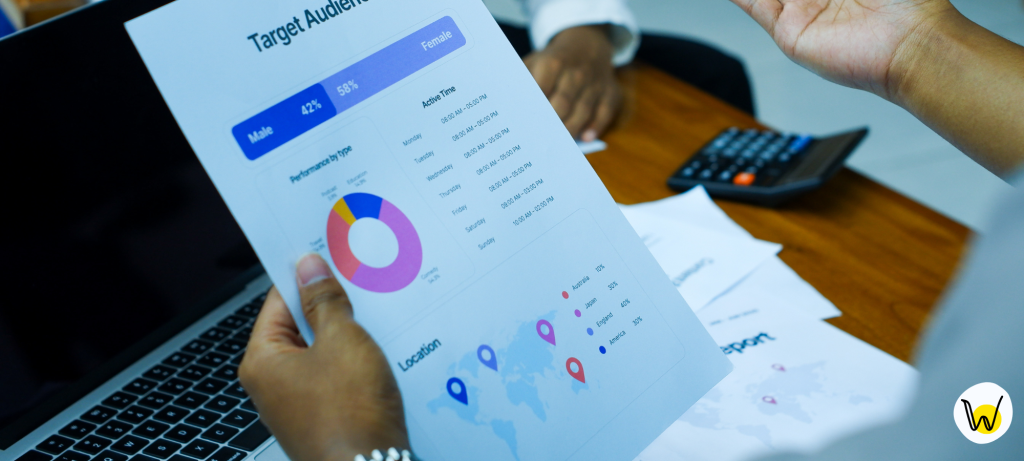
In 2026, the digital marketing world has undergone a fundamental shift. We have officially moved past the “Wild West” of data collection and into an era of radical transparency and precision. Reaching your audience is no longer about “casting a wide net”; it is about precision human connection. With third-party cookies now a relic of the past, the most effective audience targeting strategies focus on three pillars: intent, trust, and community.
If you want your message to land today, you have to stop thinking about “everyone” and start thinking about the specific “someone” whose problems you are uniquely qualified to solve. This guide dives deep into the high-performance strategies that define modern marketing.
1. Behavioral and Intent-Based Targeting
Behavioral targeting remains the gold standard because it is driven by what people actually do—their search history, click patterns, and page dwell time. Unlike demographics, which tell you who a person is, behavioral data tells you what they want right now.
If a user visits your pricing page three times in a single week, they aren’t just “browsing”; they have entered the “Decision” phase of the sales funnel. By linking this behavior to your internal data on effective ways to measure learning success, you can identify exactly which educational content—such as a specific case study or a technical whitepaper—will push them toward a final conversion.
Why Intent Trumps Demographics
In the past, marketers might target “Males, ages 25-34.” In 2026, we know that two people in that exact demographic could have completely different needs. One might be researching cyber safety strategies for business operations to protect a new startup, while the other is looking for hiking gear. Intent-based targeting allows you to ignore the “who” if the “why” isn’t there, saving you thousands in wasted ad spend.
2. Psychographic Targeting: Decoding the “Why”
While behavioral data tracks actions, psychographics explore the psychological drivers behind those actions. This includes values, lifestyle, personality traits, and deep-seated beliefs. In 2026, consumers—led by Gen Z and Alpha—prioritize brand alignment over price. They don’t just buy what you do; they buy why you do it.
The Value-Alignment Framework
To succeed here, you must move beyond surface-level interests. Are your customers motivated by sustainability? Do they value “hustle culture” or work-life balance?
- The “Conscious” Consumer: Targets users who prioritize ethical sourcing and transparent supply chains.
- The “Efficiency” seeker: Targets users looking for high-speed, automated solutions to reclaim their time.
When you target based on values, you build a brand connection that is much stronger than a simple transaction. You create “Brand Evangelists” who will defend and promote your company for free because your values mirror their own.
3. Contextual Targeting: The Privacy-First Pivot
With the decline of third-party cookies and the rise of strict privacy regulations like GDPR and CCPA, contextual targeting has made a massive, tech-driven comeback. Instead of following a user across the internet like a digital shadow, you place your message where it naturally fits the conversation.
Placement over Personalization
If someone is reading a deep-dive article on “how to improve soil health for organic gardening,” they are currently in the mindset of a gardener. Showing them an ad for organic fertilizer at that exact moment is highly relevant, regardless of whether you know their name, age, or browsing history.
- The Logic: Relevance is determined by the content currently being consumed.
- The Benefit: It respects user privacy while maintaining a high conversion rate by matching the user’s immediate focus.
4. Lookalike Audiences and AI Modeling
Once you have identified a small group of high-value customers, you can use machine learning to scale that success. Platforms like Meta, LinkedIn, and specialized B2B tools use AI to analyze thousands of data points from your “seed” list to create a Lookalike Audience.
The “Seed” Data Strategy
Your current customer base is your most valuable asset. AI models in 2026 can now look for subtle patterns in behavior and interests that a human analyst might miss. It might find that your best customers all happen to listen to the same niche podcast or engage with a specific type of interactive data visualization. By finding these “hidden” segments, you can scale your reach into new markets with a high degree of confidence.
5. Zero-Click and Generative Engine Optimization (GEO)
A major shift in 2026 is the rise of “Zero-Click” searches. Users often get their answers directly from AI summaries (like Gemini or ChatGPT) or search engine featured snippets without ever clicking through to a website. Your targeting strategy must now include AI Discovery Optimization.
How to be the “Cited Source”
To be the brand that the AI recommends, your content must be structured with extreme clarity.
- Use Schema Markup: Clearly label your data so AI agents can parse it easily.
- Authoritative Voice: AI models prioritize content that shows clear E-E-A-T (Experience, Expertise, Authoritativeness, and Trustworthiness).
- Direct Answers: Structure your content to answer specific user questions (e.g., “What is the best audience targeting strategy for SaaS?”) in a concise, list-ready format.
6. Hyper-Local and Geographic Targeting
For businesses with physical footprints or regional service areas, geo-targeting has become incredibly granular. In 2026, we use “Hyper-Local” targeting to reach users within specific neighborhoods or even within a few hundred yards of a competitor’s location (Geofencing).
The Rise of “Retail Tourism”
As digital fatigue grows, consumers are increasingly seeking out tangible brand experiences. Targeting users who are physically near your store with a real-time “mobile-only” offer can bridge the gap between digital discovery and physical purchase. This is vital for building a community presence that feels authentic rather than corporate.
Strategy Comparison Table: 2026 Landscape
| Targeting Strategy | Core Metric | Best Use Case |
| Demographic | Static Traits (Age, Gender) | Building broad brand awareness. |
| Behavioral | Actions (Clicks, Time on Site) | Driving immediate sales and conversions. |
| Psychographic | Beliefs (Values, Lifestyle) | Long-term brand loyalty and community. |
| Contextual | Environment (Current Article) | High relevance in a privacy-first world. |
| Lookalike | Similarity (AI Modeling) | Scaling proven success to new groups. |
7. Segmenting Your Message for Maximum Impact
Targeting is only half the battle; the other half is segmentation. You shouldn’t send the same message to everyone in your target audience. In 2026, we use “Dynamic Content Insertion” to swap out headlines, images, and calls-to-action (CTAs) based on which segment is viewing the page.
- Segment A (The Busy Professional): Focus on “Time-saving” and “Efficiency.”
- Segment B (The Budget-Conscious): Focus on “ROI” and “Long-term Value.”
- Segment C (The Innovator): Focus on “Cutting-edge Technology” and “First-to-market.”
By tailoring the “hook” to the specific segment, you significantly increase your click-through rates (CTR) and lower your cost per acquisition (CPA).
Conclusion:
At its core, audience targeting in 2026 is an exercise in empathy. It’s about taking the time to truly understand the humans on the other side of the screen—their fears, their aspirations, and their daily struggles. When you stop looking at them as “traffic” or “leads” and start looking at them as individuals with specific needs, your marketing stops being an interruption and starts being a valuable service.
Whether you are trying to motivate people to adopt new technology or selling a simple consumer product, the key is consistency and data-driven refinement. The brands that win in 2026 are the ones that use technology not to replace human connection, but to facilitate it at scale.

