
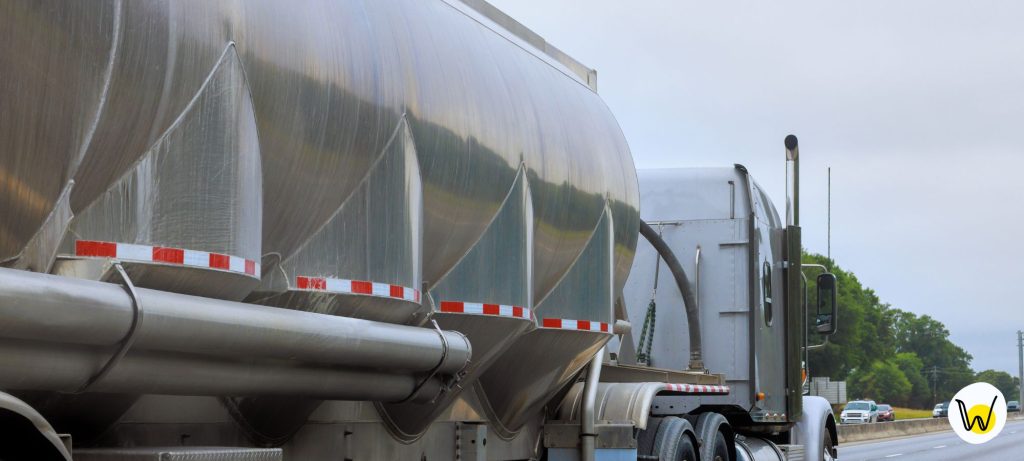
Fleet operators managing tank trucks in the Central Valley face a specific set of maintenance challenges that general-purpose vehicle service shops are rarely equipped to handle. Tank trucks operate in demanding conditions — carrying petroleum products, chemicals, food-grade liquids, or agricultural materials — and the integrity of their interiors and exteriors is directly tied to operational safety and regulatory compliance. When corrosion, contamination residue, or coating failure occurs, the response has to be both technically sound and operationally efficient.
Sandblasting is one of the most critical steps in the maintenance and recoating cycle for tank trucks. It removes corrosion, strips failed coatings, clears contamination, and prepares bare metal surfaces for new protective linings. Done well, it extends service life and protects cargo integrity. Done poorly, it introduces inconsistencies that cause coating adhesion failures, recurring rust, and eventually, out-of-service designations. For fleet operators, choosing the right provider is a decision with real downstream consequences — not a commodity purchase.
This guide outlines what fleet operators and maintenance managers should evaluate before committing to a sandblasting company for their tank truck fleet.
Understanding What Tank Truck Sandblasting Actually Involves
Tank truck sandblasting is a specialized surface preparation process, and operators searching for tank truck sandblasting bakersfield providers should understand what that specialization actually requires before making comparisons. Unlike standard vehicle blasting or structural steel work, tank trucks present a combination of confined-space access requirements, material-specific surface standards, and cargo contamination concerns that demand a provider with relevant operational experience.
The process involves the high-pressure propulsion of abrasive media against interior or exterior metal surfaces to strip rust, scale, old coatings, and debris down to clean, bare steel. The goal is a consistently prepared surface profile that allows protective coatings or linings to bond correctly. Without proper surface preparation, even the best linings fail prematurely — a fact well-documented in industrial coating failure analysis across the maintenance industry.
Interior tank blasting is particularly demanding. Workers or equipment must access tight spaces, and the application must be thorough across curved surfaces, welds, fittings, and corners. Exterior blasting on tank trucks must account for the curvature of the shell, proximity to valves and components, and the need to avoid damage to seals or fittings during the process. A company without specific experience in tank work will often deliver inconsistent results on these geometry challenges alone.
Why Surface Profile Consistency Matters More Than Speed
One of the most common mistakes fleet operators make when selecting a sandblasting provider is treating turnaround time as the primary metric. Speed matters in fleet operations, but surface profile consistency matters more. If the blasted surface has uneven texture — too rough in some areas, insufficiently cleaned in others — the protective coating applied afterward will not perform uniformly across the tank surface.
Coating manufacturers specify surface preparation requirements precisely because adhesion depends on a clean, correctly profiled substrate. An inconsistent blast profile means some sections of the coating bond well while others do not, creating stress points where moisture can infiltrate and corrosion can restart. This is how tanks that were recently relined end up showing early coating failure — not because the lining material was poor, but because the surface beneath it was not properly prepared.
When evaluating providers, ask specifically how they ensure consistency across the full interior surface of a tank. Experienced companies will have a clear process answer. Those with limited tank-specific experience often cannot explain how they handle corners, baffles, and sump areas with the same thoroughness as open sections.
Equipment and Containment Capability
The equipment a sandblasting company uses directly affects both the quality of the work and the environmental and regulatory compliance of the operation. Tank truck sandblasting generates significant amounts of abrasive waste, rust particles, old coating debris, and in some cases, residue from previously transported materials. Proper containment of this waste is not optional — it is a regulatory requirement under California’s environmental standards, and a provider operating without adequate containment infrastructure creates liability exposure for the fleet operators who hire them.
Reputable providers operate out of enclosed or semi-enclosed blasting environments with dust collection systems and waste recovery procedures. Operators should ask about how abrasive media is contained and disposed of, whether the facility meets local air quality standards, and what documentation the company provides for waste handling. California’s air quality regulations, particularly those overseen by the San Joaquin Valley Air Pollution Control District, impose specific requirements on abrasive blasting operations, and compliance is not a minor administrative concern.
Evaluating Equipment for Tank-Specific Work
Not all blasting equipment is suited for tank truck work. Providers that primarily service flat structural components or automotive exteriors may use equipment that is effective in those contexts but inadequate for the interior geometry of a cylindrical tank. The nozzle types, hose lengths, and pressure settings needed for interior tank blasting differ from general-purpose applications, and a provider using the wrong configuration will either under-clean critical areas or risk damaging internal components.
Operators should ask whether the company has equipment specifically configured for interior access and whether their technicians have direct experience working inside tank compartments. This is also a confined space entry question — any company blasting the interior of a tank truck must comply with OSHA’s confined space entry requirements, including proper ventilation, atmospheric monitoring, and entry permitting. A company that cannot describe its confined space safety protocol clearly should be disqualified on safety grounds alone.
Industry-Specific Experience with Tank Cargo Types
Tank trucks carry a wide range of materials, and the residue left behind by different cargo types affects how blasting must be approached. Petroleum tanks, chemical tanks, food-grade tanks, and water tanks all present different contamination profiles before blasting begins. A provider who does not account for the cargo history of a tank before starting work risks both inadequate cleaning outcomes and, in some cases, unsafe working conditions for their own staff.
Prior to blasting, tanks that have carried flammable materials must be properly degassed and certified gas-free. Tanks that carried corrosive chemicals require specific neutralization or purging steps. Food-grade tanks may require particular documentation of cleaning procedures to maintain compliance with applicable food safety standards. A company with real experience across these cargo categories will have intake procedures that include cargo history questions and pre-inspection steps before any work begins.
How Cargo History Affects Surface Preparation Outcomes
The type of material previously carried in a tank can affect both the corrosion pattern on the interior surface and the adhesion profile after blasting. For example, tanks that have carried acid-based materials may show deeper pitting than tanks used for dry goods or water. Tanks with heavy petroleum residue may require degreasing before blasting can achieve a clean surface profile, because abrasive media alone will not fully remove hydrocarbon contamination from pitted metal.
Fleet operators should discuss cargo history openly with potential providers and observe how the company responds. A provider who asks the right questions — about what the tank carried, how long since last cleaning, any known coating failures or previous repairs — is approaching the engagement professionally. A provider who skips that intake process is likely working from a one-size-fits-all method that will produce inconsistent outcomes across a mixed fleet.
Coordination with Coating and Lining Services
In practice, sandblasting is almost never the final step in a tank truck maintenance cycle. The purpose of blasting is surface preparation — the work that follows, whether it is a protective epoxy coating, a polyurea lining, or a specialized food-grade interior finish, depends entirely on the quality of the blasted surface. Operators benefit significantly from working with providers who either perform both the blasting and the lining application, or who coordinate closely with a trusted coating company.
The reason for this coordination is timing. Once a tank has been blasted to bare metal, the surface begins to oxidize immediately. The window between completed blasting and the application of a protective coating is narrow, and environmental conditions — temperature, humidity — affect how quickly surface degradation begins. A provider who completes blasting and then leaves the scheduling of coating work entirely to the operator introduces unnecessary risk into the process. Surface contamination or flash rust between steps can compromise the entire investment in surface preparation.
Single-Source vs. Subcontractor Arrangements
Some fleet operators prefer working with a single company that performs both blasting and coating, which simplifies scheduling, accountability, and warranty coverage. Others prefer to manage separate contractors for each step, giving them more control over vendor selection. Both approaches can work, but each carries different coordination requirements.
When using separate contractors, establish clearly in advance who is responsible for scheduling the coating application after blasting is complete, who assesses the surface before coating begins, and what happens if the surface is compromised between steps. These are practical operational questions that, if left unaddressed, create ambiguity and disputes when outcomes fall short. For high-volume fleets, working with a provider who manages the full cycle — blasting through lining — tends to reduce coordination overhead and produces more consistent long-term results.
Assessing a Provider’s Track Record in Commercial Fleet Work
Tank truck sandblasting is a niche service, and not every blasting company that advertises in the Bakersfield area has meaningful experience with commercial fleet maintenance. Before committing to a provider, operators should ask for references from fleet operators specifically — not residential or light commercial customers. The operational standards, turnaround expectations, and quality requirements of a fleet maintenance program differ substantially from single-unit or one-time jobs.
Ask how many tank trucks the company services regularly, what industries those fleets operate in, and whether they can provide documentation of prior work. Providers with real fleet experience will also understand the downstream urgency that fleet operators face — a tank truck out of service is a unit not generating revenue — and will have scheduling practices that reflect that understanding. According to standards maintained by organizations like SSPC: The Society for Protective Coatings, surface preparation quality is the single largest variable affecting protective coating performance and longevity, which underscores why selecting an experienced, accountable provider is the most consequential decision in the maintenance cycle.
Closing Considerations for Fleet Operators
Selecting a tank truck sandblasting company in Bakersfield is not a decision that should be made on price alone. The quality of surface preparation directly affects how long a coating lasts, how well it protects against corrosion and contamination, and ultimately how long a tank truck remains in productive service. Operators who treat this step as a commodity purchase often find themselves cycling through the same maintenance problems on shorter and shorter intervals.
The most reliable way to evaluate a provider is through direct, specific conversation about their processes — how they handle intake, containment, surface consistency, confined space safety, and coordination with coating work. A company with real experience in tank-specific work will answer these questions fluently. One operating outside its core competency will struggle to provide concrete answers.
For fleet operators managing multiple units in the Central Valley, building a long-term relationship with a provider who understands the specific demands of tank truck maintenance is more valuable than optimizing for the lowest cost on any individual job. Consistency, accountability, and demonstrated experience are the qualities that reduce total maintenance cost over time — and those qualities become visible in the evaluation process, before any work begins.

